

Hero Wars: Alliance
NEXTERS GLOBAL LTD
I spent time with Hero Wars: Alliance as a mobile role-playing game, and my first impression was that it is designed around short decisions rather than long, uninterrupted sessions. You build a team of heroes, improve them, choose where their abilities matter most, and let the game keep presenting new battles and upgrade goals. That makes it easy to check during a break, but it also means the experience depends heavily on whether you enjoy gradual progression more than direct, skill-based control.
The game is free to start and comes from NEXTERS GLOBAL LTD. It has reached over 100 million installs and holds a 4.5 average from around 1.7 million ratings, so it is clearly not a niche experiment. Its Teen content rating is worth keeping in mind, especially for younger players and families deciding whether the tone and purchase options are appropriate. I would describe it as a collection-and-progression RPG first, with battles serving as the place where your planning is tested.
How the current version feels to play
The current version is 1.271.200, and that matters because a long-running game like this is not experienced the same way as it was at launch. Hero rosters, progression layers, balance, and the general rhythm of rewards can change over time. I approached it as a game for someone starting now, not as a museum piece from its original release on March 15, 2017.
Related News

Hero Wars: Alliance Shows What Mobile RPG Players Expect Now
Hero Wars: Alliance – Unleash Strategy and Magic

WWE Champions: Wrestling RPG – A Knockout Blend of Strategy and Action
The central loop is straightforward. I assemble a group of heroes, send them into battles, collect resources, strengthen their equipment or abilities, and then use that improved team to push farther. The appeal is not that every fight demands rapid reactions. Instead, the interesting question is usually whether my chosen lineup can deal with the opposing combination and whether spending resources on one hero will help the whole group or only solve a short-term problem.
That structure gives the game a comfortable “one more upgrade” quality. A quick visit can be enough to claim progress, improve a character, or prepare for another attempt. At the same time, the number of systems and currencies can make the first sessions feel busier than the simple store summary suggests. I recommend treating the early game as a learning period rather than trying to optimize every decision immediately.
Related News

Why WhatsApp Messenger Still Makes Everyday Communication Feel Easy

Jurassic World: The Game Is the Better Dino Tycoon for Strategic Players

Threads in Real Life: Who Should Join, Lurk, or Leave

How SHEIN Turned Shopping Into an Endless Content Feed

How to Make Fortnite Feel Smarter on Mobile

Should You Switch to Microsoft Outlook on Mobile?
Team building is more important than collecting blindly
The most useful lesson I learned was to stop treating every new hero as an automatic improvement. A larger collection is satisfying, but a team works because its members cover different jobs. Damage, protection, support, and control need to fit together, and a character who looks powerful alone may be less valuable than a less flashy hero who completes the lineup.
For a new player, I would choose a small core team and invest in it consistently before spreading resources across the entire roster. This avoids a common mobile RPG problem: owning many underdeveloped characters while lacking one reliable group for regular content. I also found it helpful to look at why a battle was lost. If my team survived but could not finish opponents, I needed more damage; if the front line collapsed immediately, adding another attacking hero was usually the wrong response.
This is one of the game’s less obvious strengths. It rewards reading the result of a failed fight instead of simply repeating it. A loss can reveal a timing issue, a weak position in the lineup, or a mismatch between abilities. That makes progression feel more thoughtful than a basic sequence of tapping “upgrade” whenever a button lights up.
Gallery
Automation makes the game convenient, but not completely passive
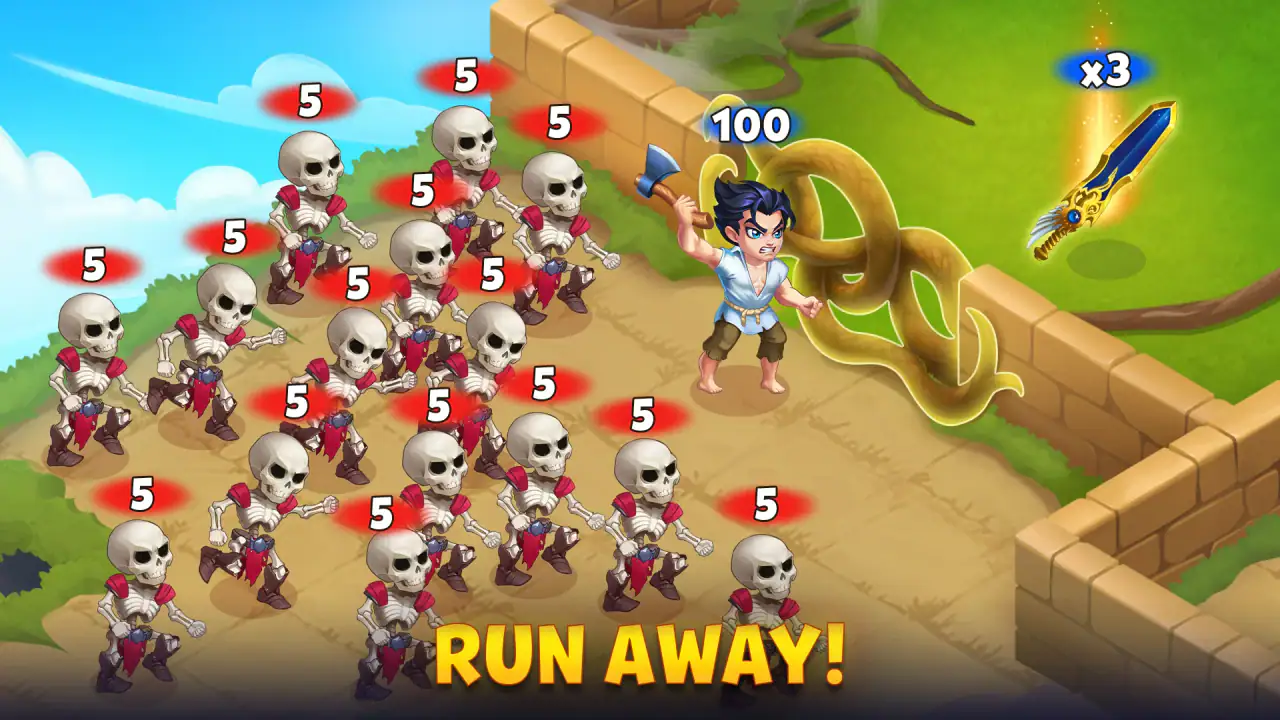
Hero Wars: Alliance is comfortable for players who cannot dedicate an hour at a time. Battles can move along without constant input, which suits commuting, waiting rooms, or a short evening routine. I could check the game, make a few decisions, and leave without feeling that I had abandoned a complicated real-time match.
Still, calling it completely idle would give the wrong impression. The important work happens before and around battles: selecting heroes, managing improvements, deciding where limited resources belong, and recognizing when a different composition is needed. Automation reduces the need for moment-to-moment control, but it does not remove the strategic layer.
That distinction also explains who may enjoy it. If you want a game that rewards planning while allowing you to step away, the format is appealing. If you want precise manual combat, movement, dodging, or the feeling that your personal reflexes decide every exchange, this will probably feel too indirect. A conventional action RPG or a more hands-on tactical game would be a better fit for that preference.
Progression is satisfying until the menu work takes over
There is a pleasant sense of momentum when a hero becomes stronger and a previously difficult battle finally becomes manageable. The game gives me clear reasons to return: improve the team, try a new opponent, and see whether the latest change made a difference. That loop is easy to understand even when the underlying systems become layered.
The trade-off is administrative time. A growing roster means more screens to inspect, more upgrade choices, and more opportunities to wonder whether I am spending an item too early. Players who enjoy organizing builds will see this as depth. Players who prefer a clean, minimal interface may see it as maintenance.
My practical advice is to create a simple personal rule: keep one main team, reserve some resources for unexpected needs, and avoid upgrading a hero merely because the game makes the option visible. This prevents the familiar feeling of being busy without becoming meaningfully stronger. It also makes the game easier to return to after a few days away.
What the game’s evolution means for players
The release history gives Hero Wars: Alliance the feel of an established service rather than a newly launched RPG. The current version shows that the product has continued moving forward from its original release, but I would separate that fact from assumptions about what future updates will bring. A current version number tells me I am joining an actively maintained experience; it does not guarantee that every future change will suit my preferred style.
For existing players, ongoing development can be valuable because it gives a long-term account more reasons to matter. New progression goals or adjustments can make a familiar roster feel useful again. The downside is that a game built around continual updates may never feel fully finished. A favorite approach can become less effective, and a player who enjoyed a simpler routine may find later layers harder to follow.
New players should therefore expect a moving target. Guides, community advice, and personal recommendations can age quickly when a live RPG changes its balance or progression priorities. I would use outside suggestions as starting points, then check whether they match the heroes and resources actually available on my account. Copying an old “best team” without understanding its purpose can lead to wasted upgrades.
How it compares with other mobile role-playing games
Compared with a traditional single-player RPG, this game offers less of a fixed journey and more of an ongoing account-building routine. A console-style adventure usually gives me a defined campaign, direct exploration, and a clearer ending. Hero Wars: Alliance instead asks me to revisit the same broad cycle of battles and improvements, which is better for people who like gradual growth and less suitable for anyone looking for a complete story they can finish and put down.
Compared with a fully manual action RPG, its advantage is convenience. I do not need perfect timing every few seconds to make progress. The cost is control. My decisions shape the team and preparation, but the battle itself does not provide the same physical involvement as a game built around movement and attacks.
It also differs from a simple collection game because the heroes are not just display pieces. Their value depends on how they function together and where they fit in the team. That creates more meaningful choices, although it also increases the chance that a casual player will feel overwhelmed by the number of possible combinations.
Where purchases change the experience
The game is free to download, but it includes in-app purchases ranging from $0.99 to $479.99 per item. That is the part I would discuss most openly with a friend before recommending it. The free entry point makes it possible to try the core loop without paying, yet the presence of high-priced individual purchase options means spending discipline matters.
I would not begin by asking whether spending is required. I would ask whether the game remains enjoyable when progress is slower and I do not buy every tempting shortcut. If the answer is yes, the free structure may be perfectly workable for that player. If the answer is no, the purchase design can turn a relaxing routine into pressure.
For families, I would use the Teen rating and the purchase range as reasons to set clear boundaries before handing the game to a younger player. A simple rule about whether purchases are allowed, combined with device-level controls, is more useful than assuming a free download has no financial risk. Adults can make the same decision for themselves by deciding in advance whether they want to spend at all.
There is another practical trade-off: paying may reduce waiting or accelerate development, but it can also shorten the satisfaction that comes from solving a team problem through patience and planning. I personally prefer to let a difficult stage teach me something before considering any shortcut. That approach keeps the strategy visible and makes it easier to judge whether the game itself, rather than faster progress, is what I enjoy.
Everyday use: a realistic short-session routine
Imagine a player with ten minutes between appointments. Hero Wars: Alliance works well in that gap because the player can review available improvements, strengthen the main lineup, attempt a few battles, and stop without needing to reach a checkpoint in a long story mission. The session has a natural beginning and end, which is one reason the format is more practical than a large open-world RPG for a busy schedule.
My preferred routine would be to start by checking the main team rather than opening every menu. I would identify one useful improvement, spend only what supports the current lineup, then test that change in a battle. If the result is better, I have learned something. If it is not, I have a clear question for the next session instead of randomly upgrading several heroes.
This workflow also helps with battery and attention. The game is easier to fit around daily life than a title that expects continuous concentration, but I would still avoid opening it automatically every few minutes. Its reward loop is designed to invite frequent returns, and keeping those visits intentional makes the experience feel like entertainment rather than another obligation.
Who should play it, and who should skip it
I would recommend it to players who like assembling teams, watching a roster improve, and making gradual progress through repeatable battles. It is especially suitable for someone who wants an RPG that can be checked in short sessions and does not require constant manual combat. The large player base also suggests that the format has broad appeal, although popularity alone does not make its progression style right for everyone.
I would be more cautious recommending it to someone who dislikes menus, recurring upgrade tasks, or games that keep evolving after release. It is also not my first choice for a player seeking a strong one-time purchase with a complete, self-contained campaign. Someone who wants competitive action decided mainly by reflexes should look elsewhere as well.
Parents and younger players deserve a separate consideration. The Teen rating means I would review the experience personally and discuss purchases before allowing regular play. The game’s accessible presentation can make it feel harmless at a glance, but the long-term progression and purchase options deserve the same attention as any other free-to-start mobile game.
Small decisions that improve the long-term experience
One useful habit is to keep a record of why I changed the team. It can be as simple as remembering that a hero was added to protect a fragile damage dealer or to answer a particular type of opponent. Without that reason, it is easy to replace characters based on novelty and lose the structure that made the lineup work.
A second habit is to test one change at a time. If I replace two heroes, upgrade several abilities, and alter the lineup together, I cannot tell what solved the problem. Making smaller adjustments turns each battle into feedback rather than a lottery. This is particularly helpful for players who do not want to follow external recommendations.
A third is to treat resources as a planning tool, not a reward that must be spent immediately. Saving a little flexibility can be more valuable than making one hero look impressive today. The strongest account is not necessarily the one with the highest individual character; it is the one that can adapt when a familiar team stops working.
What I would watch before committing long term
I would watch how comfortable I remain with the update cycle. Continued development is encouraging, but the real question is whether new layers add decisions I enjoy or chores I tolerate. I would also pay attention to whether my progress feels earned through team building or mainly accelerated through spending. That personal balance will differ from one player to another.
I would also watch the clarity of the progression screens. A complex RPG can be rewarding when every system has a recognizable purpose. It becomes tiring when I need to open several menus just to understand what changed. New players should give themselves time to learn the structure instead of judging the entire game after the first confusing session.
Finally, I would watch my own play pattern. If I look forward to experimenting with heroes and solving difficult stages, the game is doing its job. If I am opening it only to clear obligations or chase a reward I no longer care about, that is a good moment to step back. No update can fix a progression loop that no longer fits my interests.
Overall, Hero Wars: Alliance is a capable, long-running role-playing game built around hero teams, gradual upgrades, and convenient sessions. I like its emphasis on preparation and the way a failed battle can encourage a smarter lineup instead of faster fingers. I am less enthusiastic about the menu-heavy progression and the pressure that can surround optional purchases, especially for players who struggle to ignore shortcuts.
My recommendation is simple: try it if you enjoy collection-based RPG planning and want something that fits into small pieces of the day. Start slowly, focus on a dependable team, and decide your spending limits before the progression accelerates. Skip it if you want direct combat, a finished story, or a game that stays mechanically unchanged. For the right player, it offers a satisfying long-term hobby; for the wrong one, its ongoing systems may feel more like upkeep than adventure.
FAQs for Hero Wars: Alliance
What is Hero Wars: Alliance about?
Hero Wars: Alliance is an engaging role-playing game (RPG) where players collect and upgrade heroes to battle against various enemies. Players can form alliances, strategize battles, and participate in events. The game offers a mix of adventure, strategy, and multiplayer elements, making it an exciting choice for RPG enthusiasts.
Is Hero Wars: Alliance free to play?
Yes, Hero Wars: Alliance is free to download and play. However, it offers in-app purchases that allow players to acquire additional resources, heroes, and enhancements. While these purchases can enhance the gameplay experience, they are not necessary to progress in the game.
What platforms is Hero Wars: Alliance available on?
Hero Wars: Alliance is available on both Android and iOS platforms. Players can download the game from the Google Play Store or Apple App Store. It is designed to be compatible with most devices, ensuring a wide reach for both mobile and tablet users.
How does the multiplayer feature work in Hero Wars: Alliance?
In Hero Wars: Alliance, players can join or create alliances to collaborate with others. Alliances allow players to strategize and fight in battles together, participate in special events, and earn rewards. The game fosters a sense of community and teamwork among players worldwide.
Are there any tips for new players starting out in Hero Wars: Alliance?
New players should focus on building a balanced team of heroes, each with unique abilities. Participating in daily quests and events can yield valuable rewards. It's also advantageous to join an active alliance early on to gain strategic advice and support from experienced players.
Pros
- Engaging storyline with rich character development.
- Smooth graphics and appealing visual effects.
- Wide range of heroes to customize your team.
- Regular updates and events keep it fresh.
- Strong community interaction and support.
Cons
- In-app purchases can be quite expensive.
- Energy system limits continuous play.
- Requires a stable internet connection.
- Progression can feel slow without spending.
- Some features are locked behind paywalls.


